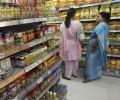
Hindustan Unilever Ltd, the Indian unit of Anglo-Dutch consumer group Unilever Plc, reported an 18 per cent rise in quarterly profit, beating estimates, helped by a revival in consumer spending.

FMCG major HUL on Friday announced the appointment of Rohit Jawa as the managing director & chief executive officer to succeed Sanjiv Mehta who will retire from the company after leading it for a decade. Jawa, presently the Chief of Transformation for Unilever, would take over the leadership role for a term of five consecutive years with effect from June 27, 2023, the company said in a statement. "The appointment of Rohit Jawa as a whole-time director and MD & CEO will be subject to approval of Shareholders and other statutory approvals as may be applicable," it added.

Among the Sensex firms, Axis Bank fell over 4 per cent, emerging as the biggest laggard. State Bank of India, IndusInd Bank, NTPC, UltraTech Cement, Bajaj Finserv, Tata Steel, JSW Steel, Maruti and Larsen & Toubro were the other major laggards. Nestle, Hindustan Unilever, HDFC Bank, Tata Consultancy Services, Infosys, HCL Technologies, and Asian Paints were among the gainers.

Benchmark equity indices Sensex and Nifty pared early gains to settle lower on Wednesday due to late selling in index major Reliance Industries, ITC and HDFC Bank even as the RBI took the first step towards a rate cut in its monetary policy review. Erasing its early gains, the 30-share BSE Sensex fell 167.71 points or 0.21 per cent to close at 81,467.1. During the day, it surged 684.4 points or 0.83 per cent to hit an intra-day high of 82,319.21.

Investors lost Rs 24.69 lakh crore in market valuation in the last four days of severe drubbing in the equity market. Spike in global crude prices, unabated foreign fund outflows, a strong US jobs data diminishing early rate cut expectations, and the rupee logging its steepest single-day fall in nearly two years dampened investors' sentiment.

A day after facing massive erosion from their wealth, equity investors became richer by Rs 13.22 lakh crore on Wednesday with markets making a strong comeback. The 30-share BSE Sensex jumped 2,303.19 points, or 3.20 per cent, to settle at 74,382.24. During the day, it rallied 2,455.77 points, or 3.40 per cent, to 74,534.82.

From the Sensex firms, Power Grid, NTPC, Tech Mahindra, Bharti Airtel, Tata Motors, IndusInd Bank, Reliance Industries, Kotak Mahindra Bank and Maruti were among the laggards. Asian Paints, Wipro, JSW Steel, Hindustan Unilever, Bajaj Finserv and Mahindra & Mahindra were among the biggest gainers.

Benchmark equity indices ended marginally higher on Thursday, trimming most of their intra-day gains, as investors turned cautious ahead of the quarterly results of IT behemoths TCS and Infosys later in the day. Announcement of the US inflation data and domestic macroeconomic numbers also forced investors to remain on the sidelines. The 30-share BSE Sensex climbed 63.47 points or 0.09 per cent to settle at 71,721.18.

The fast moving consumer goods major Hindustan Unilever on Monday said it exited from BPO firm Capgemini Business Services India by selling its remaining 49 per cent stake to IT consultancy firm Cap Gemini SA for an undisclosed sum.

Among the Sensex firms, State Bank of India, ITC, Nestle, Asian Paints, Tech Mahindra, Mahindra & Mahindra, Tata Consultancy Services and Hindustan Unilever were the major laggards. In contrast, HCL Technologies, Power Grid, Sun Pharma, NTPC, Bajaj Finance and Titan were the gainers.
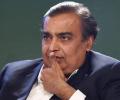
Billionaire Mukesh Ambani-promoted Reliance Industries Ltd (RIL) on Tuesday became the first listed company to hit the Rs 20 lakh crore market valuation mark. The market heavyweight's stock jumped 1.88 per cent to its record high of Rs 2,957.80 apiece on the BSE. It finally settled at Rs 2,928.95 per piece, up 0.90 per cent on the bourse.

Among the Sensex firms, Larsen & Toubro, Tata Consultancy Services, Infosys, HCL Technologies, Hindustan Unilever, Axis Bank, ICICI Bank and Wipro were the major gainers. Nestle India, Asian Paints, JSW Steel, Kotak Mahindra Bank and HDFC Bank were among the losers.

Among Sensex firms, Power Grid and Tata Steel fell more than 2 per cent. HDFC Bank, State Bank of India, IndusInd Bank, Hindustan Unilever and NTPC were among the major laggards. Nestle, Bajaj Finserv and Bajaj Finance were among the gainers.

From the 30 Sensex pack, State Bank of India, Mahindra & Mahindra, Bharti Airtel, Titan, HDFC Bank, IndusInd Bank, Axis Bank and Bajaj Finance were the biggest laggards. JSW Steel, Tech Mahindra, Larsen & Toubro, Hindustan Unilever, HCL Technologies and Reliance Industries were among the gainers from the pack.

From the Sensex basket, Kotak Mahindra Bank jumped 5 per cent after the company reported a 25 per cent growth in its March quarter net profit at Rs 5,302 crore, limited by a drop in the core income due to narrow interest margins. Tata Consultancy Services, Hindustan Unilever, Mahindra & Mahindra, Sun Pharma, Tech Mahindra and IndusInd Bank were among the other major gainers. Titan tanked 7 per cent after its March quarter earnings failed to cheer investors.
Titan, Maruti Suzuki India, Asian Paints, Mahindra & Mahindra and Hindustan Unilever Limited were the biggest drags on the Sensex, tumbling up to 5.05 per cent. In contrast, ITC, Dr Reddy's Laboratories, Tech Mahindra and UltraTech Cement were among the gainers.

Susim Mukul Datta has not passed away, rather he is the ever-youthful leader to all who knew him, points out R Gopalakrishnan.

Among the Sensex firms, Hindustan Unilever, Tech Mahindra, Infosys, Reliance Industries, Bajaj Finance, Tata Consultancy Services, Titan and UltraTech Cement were the major laggards. Mahindra & Mahindra, Power Grid, IndusInd Bank, Tata Motors, Larsen & Toubro and Maruti were among the gainers.
Among the Sensex firms, Asian Paints, Titan, Larsen & Toubro, JSW Steel, ITC, Hindustan Unilever, Maruti and Reliance Industries were the major gainers. ICICI Bank, NTPC, Infosys, Tech Mahindra, Tata Steel and Bajaj Finance were among the laggards.

Reliance Industries closed more than half a per cent higher after the company announced a proposed merger of media and entertainment assets of Viacom18 with Star India. Hindustan Unilever, Bharti Airtel, Tata Motors, ITC, Tech Mahindra and Axis Bank were among the laggards.

Among the Sensex firms, Larsen & Toubro, Axis Bank, Tata Steel, Bajaj Finance, Power Grid, Asian Paints, Mahindra & Mahindra and Bajaj Finserv were the biggest gainers. State Bank of India, Hindustan Unilever, Tata Motors and Titan were the laggards.
From the 30-share Sensex blue-chip pack, Titan, Adani Ports, UltraTech Cement, Tata Consultancy Services, NTPC, Bharti Airtel, Tech Mahindra, Infosys, Hindustan Unilever and JSW Steel were the biggest laggards.
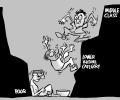
Days before Diwali, the monthly economic review by the finance ministry has highlighted moderation in urban demand, softening consumer sentiments and limited footfall as areas that need to be watched. In its review, released on Monday, the ministry also noted the early signs of artificial intelligence displacing workers, as described in anecdotal reports. The commentary from several large consumer goods companies, including Nestl India, Hindustan Unilever, and ITC, in their recent quarterly earnings, has been around a sluggish urban demand. Rural consumption, however, has mostly seen a revival, the companies pointed out.

With crude palm oil prices on the rise, companies have started to jack up rates of soaps and edible oils in order to pass on the hike to consumers. Crude palm oil, one of the main ingredients in the manufacture of some consumer goods, saw a price rise of 45.2 per cent in the last three months. One of the country's largest consumer companies, Hindustan Unilever, said it has already started to take price increases in the skin cleansing category.

Seven of the 10 most valued domestic companies together added Rs 1,31,173.41 crore in market valuation last week, with HUL and TCS emerging as the biggest gainers. Reliance Industries, Infosys, HDFC, Bajaj Finance and Wipro also saw a rise in their market valuations, while HDFC Bank, ICICI Bank and SBI suffered losses. The market capitalisation (m-cap) of Hindustan Unilever Limited (HUL) zoomed Rs 50,234.21 crore to Rs 6,15,016.63 crore.

Personal care products, the firm's most profitable segment, has been losing market share consistently over the past several quarters. The first quarter of this financial year hasn't been too exciting either. Domestic sales grew by 12.8 per cent, with underlying volume growth of about 2 per cent.

'Selling could further intensify and take the index towards 22,800-22,750 in the near-term.'

From the Sensex pack, Infosys, Hindustan Unilever, Reliance Industries, ICICI Bank, Larsen & Toubro, Asian Paints, Nestle, Axis Bank, Wipro and Kotak Mahindra Bank were the major gainers. JSW Steel, State Bank of India, Tata Steel, Bajaj Finserv, UltraTech Cement, IndusInd Bank, Tata Motors and Bajaj Finance were the major laggards.

Among the Sensex firms, major winners included Tata Steel, rising 3.77 per cent, followed by HCL Tech, which gained 3.62 per cent. IndusInd Bank and PowerGrid closed with a gain of 3,60 and 3.34 per cent, respectively. Other gainers were Tech Mahindra, Hindustan Unilever, Bajaj Finserve and Bharti Airtel, among others. On the other hand, ICICI Bank, Axis Bank, Asian Paints, Bajaj Finance and TCS were the only laggards, sliding up to 2.94 per cent.

Among the Sensex firms, IndusInd Bank was the biggest loser and fell 6.13 per cent, followed by SBI (3.99 pc), Hindustan Unilever (3.82 pc), Axis Bank (3.41 pc) and HDFC Bank (3.23 pc). In contrast, Sun Pharma, Bharti Airtel, ICICI Bank and PowerGrid defied the trend and closed with gains of up to 3.67 per cent. TCS and Bajaj Finserve were the other gainers.

Hindustan Unilever has many firsts to its credit. Now, it adds one more. India's largest fast-moving consumer goods company has found a new way of keeping in touch with its employees -- present and former.

Benchmark stock indices Sensex and Nifty closed with losses in highly volatile trade on Thursday as banking and financial stocks retreated amid a weak trend in global equity markets. The 30-share BSE Sensex declined 89.14 points or 0.15 per cent to settle at 57,595.68. During the day, it touched a low of 57,138.51 and a high of 57,827.99. The broader NSE Nifty dipped 22.90 points or 0.13 per cent to settle at 17,222.75.
Equity benchmarks ended with gains on Tuesday amid a largely firm trend in global markets after facing bouts of volatility during the session. The 30-share BSE Sensex climbed 126.41 points or 0.21 per cent to settle at 61,294.20. During the day, it hit a high of 61,343.96 and a low of 61,004.04.
Benchmark equity indices Sensex and Nifty pared their early gains to close nearly 1 per cent lower on Monday as surging oil prices played spoilsport amid prolonged Russia-Ukraine war. The 30-share Sensex plunged by 571.44 points or 0.99 per cent to settle at 57,292.49. During the day, it tanked 634.85 points or 1.09 per cent to 57,229.08. The broader NSE Nifty declined by 169.45 points or 0.98 per cent to finish at 17,117.60. Among Sensex constituents, Power Grid, Asian Paints, UltraTech Cement, Nestle, Hindustan Unilever Limited and HCL Technologies were among the major laggards.
After a gap of five years, Hindustan Unilever has bagged slot zero position on B-school campuses. In 2007, the company had slipped to number 14 on the recruiters' list of B-schools. "It's an improvement of our brand value and affirmation of our employer brand," says Leena Nair, executive director HR, Hindustan Unilever.
Equity benchmark index Sensex on Wednesday crashed over 900 points to sink below the 73,000 level due to widespread selling pressure amid a sharp fall in smallcap and midcap indices. Besides, deep losses in utility, energy and metal stocks and recent selling by foreign investors added to the gloom, analysts said. Benchmark indices started the session on a positive note, but the selling intensified during afternoon trade, with all sectoral indices ending in the red.
Equity benchmarks Sensex and Nifty closed with gains on Tuesday, following a firm trend in the global markets. Extending its previous day's rally, the 30-share BSE Sensex jumped 361.01 points or 0.60 per cent to settle at 60,927.43. During the day, it rallied 420.26 points or 0.69 per cent to 60,986.68.
From the Sensex pack, State Bank of India, IndusInd Bank, Bajaj Finserv, Tata Steel, ITC, Axis Bank, HDFC Bank, UltraTech Cement, NTPC and Tata Motors were the major winners. Nestle, Kotak Mahindra Bank, Bharti Airtel, HCL Technologies and Hindustan Unilever were the laggards.
From the Sensex pack, Mahindra & Mahindra, Power Grid, Bharti Airtel, Bajaj Finserv, HDFC, Hindustan Unilever, Maruti, ITC, Titan, Nestle, Bajaj Finance and Reliance Industries were the major winners.
From the Sensex pack, Nestle, Tata Consultancy Services, IndusInd Bank, Asian Paints, Bharti Airtel, Tech Mahindra, UltraTech Cement, Kotak Mahindra Bank and Hindustan Unilever were among the major laggards. Tata Steel, JSW Steel, HCL Technologies, Axis Bank, Power Grid and Mahindra & Mahindra were among the gainers.
